GBS Creative

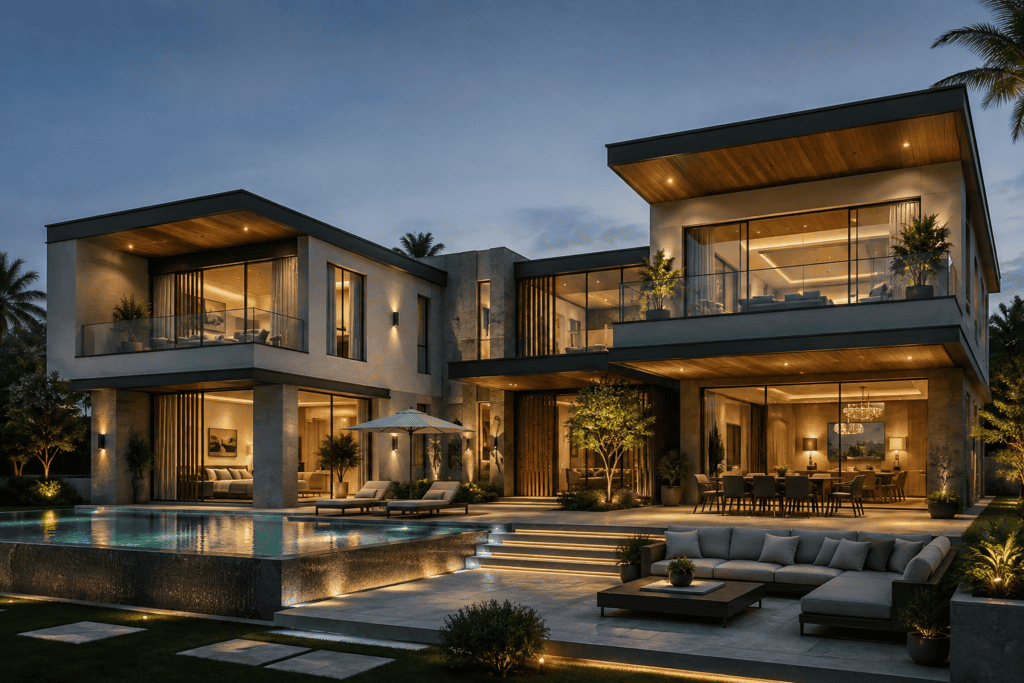
Modern luxury villa interior with open-plan living room, warm lighting, and outdoor swimming pool view

Top 5 Modern Villa Interior Design Non-Negotiables

It should feel effortless when you walk through it. Morning light should enter naturally. Storage should be where you need it. The living room should feel open without feeling empty. Materials should look refined but still work with everyday life. That is the difference between decorating a villa and designing a villa. For a luxury home, some interior design decisions are simply not worth compromising on. These are the details that influence comfort, functionality, longevity, and the overall character of the property. At GBS Creative Pvt. Ltd., based in Ranchi, Jharkhand and working across India, we approach residential interior design as part of a larger design-build experience. Architecture, interiors, lighting, landscape, pools, ponds, and outdoor spaces should complement one another rather than feel like separate projects. Here are five interior design non-negotiables that can make a modern villa feel genuinely considered. 1. A Thoughtful Space Plan Comes Before Beautiful Furniture One of the biggest mistakes in villa interiors is starting with furniture, colours, or decorative finishes before deciding how people will actually use the space. A luxury interior needs a functional space plan first. Ask simple questions: These decisions determine whether a home feels spacious or awkward. A large villa can still feel cramped if rooms are poorly connected. Conversely, a carefully planned floor layout can make a smaller space feel generous. Open Plan Doesn’t Mean Everything Has to Be Open Modern villa design often uses open-plan living, but that does not mean removing every wall. The best layouts create visual connections while maintaining functional zones. For example, a living room may flow into a dining space while furniture, ceiling treatments, flooring, or lighting subtly define each area. This creates openness without losing identity. 2. Lighting Must Be Designed With the Interior If there is one element that can completely change an interior without changing its architecture, it is lighting. A room with expensive furniture can still feel ordinary under harsh, poorly positioned lights. Good interior lighting design uses layers. Ambient Lighting This provides general illumination through ceiling lights, recessed downlights, or indirect lighting. Task Lighting This focuses on activities such as cooking, reading, dressing, working, or applying makeup. Accent Lighting This highlights artwork, textured walls, architectural details, furniture, or decorative objects. Decorative Lighting Pendant lights, chandeliers, wall sconces, and statement fixtures can become design elements themselves. The most successful villa interiors combine these layers rather than relying on a single light source. 3. Materials Should Look Good—and Survive Real Life Luxury does not mean choosing the most expensive material available. It means selecting materials that are appropriate for the space and expected use. A beautiful marble may work wonderfully in an entrance or living area. A high-traffic family space may require a surface that is easier to maintain. Similarly, kitchen materials need to handle heat, moisture, cleaning, and daily use. Bathroom finishes need to withstand humidity. Outdoor-connected spaces need materials that can transition comfortably between interior and exterior environments. Think Beyond Appearance When selecting materials, consider: This is especially important for villas because the interior is usually expected to remain visually relevant for many years. A timeless material palette often performs better than following every short-lived interior trend. 4. Storage Should Be Designed Into the Architecture Beautiful homes still need somewhere to put things. Shoes, luggage, appliances, clothing, books, cleaning equipment, electronics, children’s belongings—the list grows quickly. Poor storage planning eventually creates visual clutter. That is why built-in storage should be considered during the interior design stage, not added as an emergency solution later. Smart Villa Storage Ideas The goal is not simply to create more cupboards. It is to make storage feel integrated with the architecture. A beautifully detailed wall can conceal an entire storage system while maintaining a clean, minimal appearance. 5. Indoor and Outdoor Spaces Should Feel Connected This is one of the most important principles for modern villa design. A villa should not feel like one building inside and an unrelated landscape outside. The two should work together. Large windows, sliding doors, continuous flooring, coordinated materials, carefully positioned furniture, and landscape views can visually connect the interior with the outdoors. Imagine sitting in your living room at night and seeing a softly illuminated pool beyond the glass. Or looking from the dining room toward a koi pond surrounded by planting. The outdoor space becomes part of the interior experience. This is where interior design, landscape design, pool design, and architectural lighting need to be coordinated. GBS Creative’s residential interior design services can be planned alongside the broader outdoor environment, allowing the interior and exterior to share a consistent design language. Bonus: Don’t Treat the Pool as a Separate Project For modern villas, the swimming pool is often one of the most visible elements from inside the house. That means its position, shape, materials, lighting, and surrounding landscape should be considered while planning the villa interior. For example, a living room with floor-to-ceiling glass might be designed specifically around a pool view. A dining area may face a landscaped deck. A bedroom balcony could overlook a garden and water feature. This approach makes the property feel more like an integrated resort rather than a house with a pool added later. If you’re planning a pool as part of a villa project, GBS Creative’s pool design, construction and maintenance services can help coordinate the technical and design requirements from concept through long-term maintenance. How Lighting Connects Interior Design With Architecture Interior lighting does not stop at the front door. The same design language can continue outside through façade lighting, landscape lighting, pathway illumination, pool lights, pond lights, and fountain lighting. For example, warm interior lighting can transition into warm landscape lighting outside. Architectural wall textures can be highlighted from both sides of a glass façade. A pool can become a glowing visual extension of the living room. This is why lighting should be planned alongside the architecture rather than treated as a finishing-stage electrical decision. GBS Creative provides architectural and outdoor lighting solutions for homes, commercial

Top 5 Modern Villa Interior Design Non-Negotiables Read More »
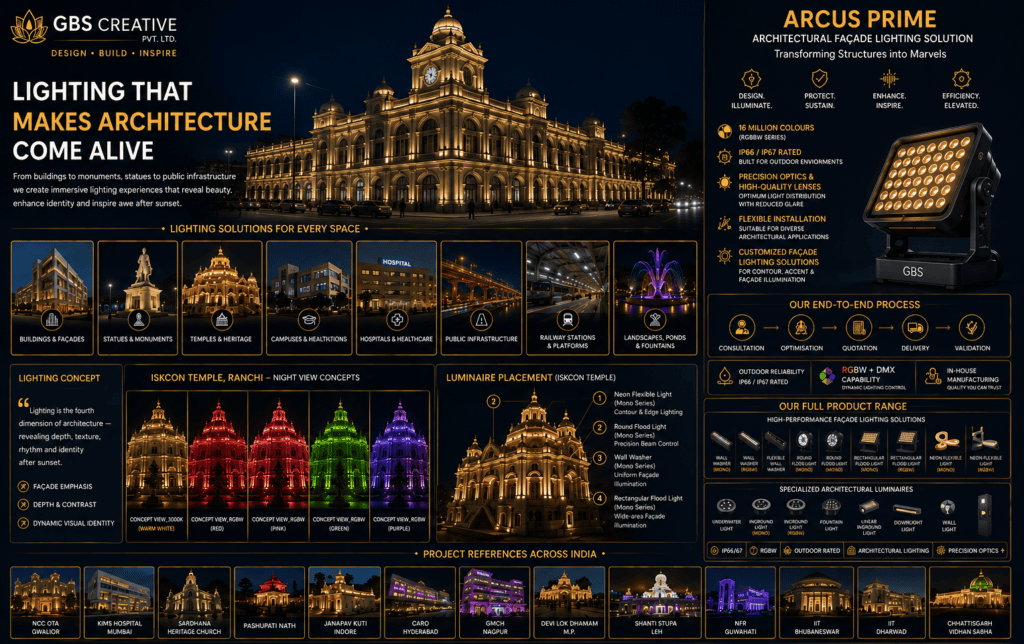
Architectural lighting brochure by GBS Creative featuring façade lighting for buildings, monuments, statues, campuses, railway stations, public infrastructure, ponds, fountains, and RGBW lighting solutions across India.

Architectural Lighting: The Complete Guide to Lighting Buildings, Statues, Monuments, Campuses & Public Spaces

Some places become unforgettable only after sunset. A temple glows with quiet dignity, a civic building stands proudly against the night sky, a statue gains dramatic depth, and a railway station becomes a welcoming landmark for thousands of travellers. The structure itself may remain unchanged, but light transforms the way we experience it. I realised this during an evening drive through Ranchi. A monument that appeared modest during the day suddenly felt monumental under carefully placed lighting. The shadows were intentional, the textures were visible, and the entire space carried a sense of occasion. That is the power of architectural lighting—it reveals the soul of a structure. At GBS Creative Pvt. Ltd., headquartered in Ranchi, Jharkhand and serving projects across India, lighting is designed as an integral part of architecture, landscape, public infrastructure, heritage conservation, and urban identity. Our portfolio includes residential developments, commercial buildings, hospitals, campuses, temples, heritage structures, monuments, public plazas, railway infrastructure, and civic landmarks. Notably, GBS Creative has contributed lighting expertise to Ranchi Junction Railway Station and associated railway platform environments, one of the most important public transportation landmarks in the capital of Jharkhand. This guide explains how professional lighting works across different types of buildings and public spaces, and why integrated architectural illumination creates lasting visual impact. Lighting Is the Fourth Dimension of Architecture Architecture defines form; lighting reveals it. After dark, light becomes the medium that communicates depth, rhythm, materiality, and identity. A façade can appear calm or dramatic, a statue can feel heroic or contemplative, and a public plaza can feel safe and inviting. At GBS Creative, we often describe lighting as the fourth dimension of architecture because it adds a new layer of perception that daylight alone cannot provide. What Architectural Lighting Covers Professional lighting design extends far beyond homes. A comprehensive architectural lighting strategy may include: Each category requires a different lighting language, technical approach, and emotional response. Façade Lighting: Turning Buildings into Landmarks Façade lighting is one of the most powerful tools for establishing nighttime identity. Rather than flooding a building with light, the goal is to emphasize its architectural character. Key Design Principles GBS Creative’s Arcus Prime architectural façade lighting system is designed specifically for these applications, offering high-performance outdoor luminaires with precision optics, RGBBW colour capability, and IP66/IP67 protection for long-term reliability. Statue & Monument Lighting: Creating Presence and Respect Lighting statues is both an artistic and technical exercise. The wrong beam angle can flatten a sculpture; the right one can reveal expression, texture, and form. Effective statue lighting typically uses: This approach is especially important for memorials, public sculptures, cultural icons, and ceremonial monuments where dignity and visual clarity are essential. Heritage & Temple Lighting: Revealing Craftsmanship After Dark Historic and religious structures demand sensitivity. The objective is not spectacle but revelation allowing carvings, domes, columns, and stone textures to become visible without altering the character of the architecture. A strong example is the ISKCON Temple, Ranchi. Warm 3000K lighting highlights the temple’s intricate façade and architectural depth, while RGBW lighting can be used for festival and ceremonial themes. The result is a transformed nighttime presence that respects tradition while creating a memorable visual identity. This same philosophy guides heritage façade lighting, civic heritage projects, and conservation-oriented illumination across India. Campus & Institutional Lighting: Safety, Identity, and Experience Universities, hospitals, research institutes, and corporate campuses operate long after daylight hours. Their lighting must support safety, wayfinding, comfort, and institutional identity simultaneously. Typical Campus Lighting Elements Our institutional lighting experience includes campuses, healthcare facilities, and civic environments where performance and reliability are as important as aesthetics. Railway Station & Public Infrastructure Lighting Public infrastructure presents one of the most demanding lighting environments. Railway stations require uniform illumination, high visibility, weather resistance, energy efficiency, and ease of maintenance. GBS Creative has contributed lighting expertise to Ranchi Junction Railway Station and associated railway platform environments, helping enhance passenger safety, visibility, and nighttime identity at a major transportation hub in Jharkhand. The project demonstrates our capability in railway lighting, civic lighting, public infrastructure illumination, and government-oriented architectural lighting applications. Public projects of this scale require rigorous engineering, durable outdoor-rated luminaires, and careful coordination with operational infrastructure. Landscape, Pond & Fountain Lighting in Public and Commercial Spaces Water and landscape lighting are not limited to residences. Hotels, resorts, campuses, public parks, temples, and civic plazas frequently use illuminated water features to create atmosphere and strengthen place identity. Pond Lighting Subtle underwater lighting can reveal aquatic life, reflections, and water movement while preserving a tranquil ambience. Our pond types guide explores how different pond styles influence lighting strategy and visual experience. Fountain Lighting Dynamic fountain lighting adds movement, colour, and ceremonial character to public spaces and hospitality projects. Different fountain forms require different beam angles and control systems; our fountain types guide explains these applications in greater detail. Integrated Aquascape Environments For projects that combine pools, ponds, fountains, and landscape lighting, our Aquascape services provide a coordinated design approach so that water, light, and architecture work together as a single experience. Commercial, Hotel & Hospitality Lighting In hotels, resorts, retail complexes, and mixed-use developments, lighting directly influences perception of quality. Guests often decide whether a place feels premium within the first few seconds of arrival. Key hospitality lighting goals include: A well-lit hospitality environment encourages people to stay longer and remember the experience more vividly. Smart RGBW Lighting & Dynamic Control Modern architectural lighting increasingly uses RGBW + DMX control systems for programmable colour scenes, festival lighting, national celebrations, institutional branding, and event-based illumination. Benefits include: This capability is particularly valuable for temples, government buildings, campuses, monuments, and public landmarks. The Technical Foundation Behind Great Lighting Beautiful lighting is impossible without strong engineering. GBS Creative emphasizes: These technical decisions are what make a lighting installation perform reliably year after year. Our End-to-End Lighting Process Every project follows a structured workflow: This integrated process ensures that design intent, technical performance, and execution remain aligned from concept to completion. Why Integrated Lighting Design Performs

Architectural Lighting: The Complete Guide to Lighting Buildings, Statues, Monuments, Campuses & Public Spaces Read More »

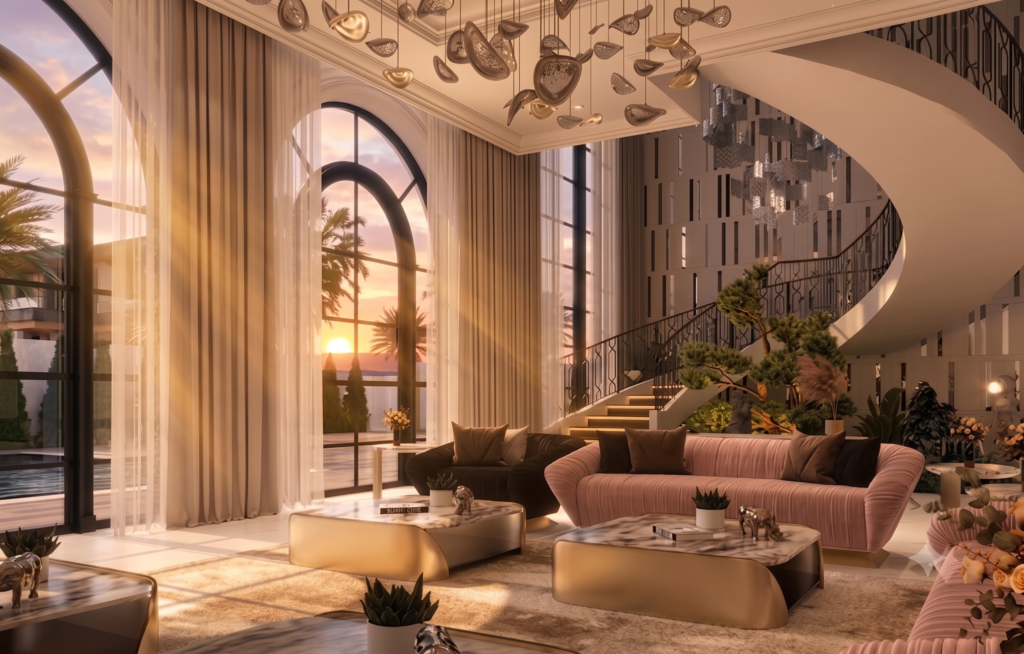
Luxury double-height living room featuring light pink velvet sofas, a sculptural spiral staircase, and large arched windows showing a vibrant sunrise.

The All-In-One Masterpiece: Why Choosing One Firm Is the Ultimate Luxury

I used to think luxury meant having access to the best specialists—the best architect, the best interior designer, the best landscape consultant, the best pool contractor, and the best lighting expert. It sounded impressive on paper. In reality, it often meant endless phone calls, conflicting opinions, delayed decisions, and a home that felt like several different projects stitched together. The moment that changed my mind was during a friend’s home construction project. One contractor blamed the designer for a measurement issue. The designer blamed the civil team. The landscape work had to be redone because underground plumbing had not been coordinated. By the time the house was completed, everyone was exhausted. The home was beautiful, but the journey certainly wasn’t luxurious. That experience taught me something important: true luxury is not only about the final result. It is about the ease, clarity, and confidence you feel throughout the process. What Does “All-In-One” Actually Mean? An all-in-one design-build firm handles multiple disciplines under one roof—architecture, interior design, landscape design, water features, construction coordination, lighting, and often long-term maintenance planning. Instead of hiring separate companies for each stage, you work with one integrated team that shares the same vision from the beginning. At GBS Creative Pvt. Ltd., headquartered in Ranchi and serving projects across India, this integrated approach is central to how projects are delivered. The idea is simple: the home should feel like a single masterpiece, not a collection of independent decisions. Luxury Begins with One Conversation One of the most underrated pleasures of working with a single firm is having one point of contact. You explain your lifestyle once. You discuss your budget once. You share your inspirations once. After that, the internal coordination happens behind the scenes. Imagine describing your dream outdoor space to an architect, then repeating the same story to a landscape designer, then again to a pool contractor, and later to a lighting consultant. Each conversation introduces the possibility of something being lost in translation. With an integrated team, everyone starts from the same brief. That consistency is what creates harmony in the final design. The Home Feels Cohesive, Not Assembled Walk into a thoughtfully designed luxury home and you can usually sense that every element belongs together. The flooring aligns with the outdoor stone. The lighting complements the water feature. The landscape frames the architecture rather than competing with it. The pool feels like an extension of the living room. This level of cohesion is difficult when multiple independent vendors are making decisions separately. An integrated firm can coordinate materials, colors, proportions, lighting temperatures, and sightlines across the entire property. For example, if you are planning a pool, pond, or fountain as part of your residence, it helps when the same team is considering both the outdoor environment and the interior experience. GBS Creative’s Aquascape services are designed with that broader relationship in mind rather than treating water features as isolated additions. Time Is the New Luxury Most homeowners underestimate how much time coordination consumes. Scheduling site visits, comparing quotations, resolving disputes, and following up with multiple vendors can become a second full-time job. An all-in-one firm dramatically reduces that burden. Meetings are consolidated. Decisions are documented centrally. Drawings are coordinated internally. Procurement is planned as a single workflow rather than a series of disconnected tasks. The result is not just faster execution; it is a calmer experience. You spend less time managing the project and more time imagining life in the finished home. Fewer Surprises, Better Budget Control One of the biggest causes of budget escalation is late-stage conflict between disciplines. A lighting conduit appears where a water line was planned. A retaining wall changes after landscape design begins. A ceiling detail is revised after interior furniture is finalized. When the same firm oversees the entire project, these clashes are identified much earlier. Quantities are coordinated, material selections are aligned, and construction sequencing is planned collectively. That usually leads to more accurate budgeting and fewer costly revisions. Luxury clients often value predictability more than bargain pricing. Knowing what the project is likely to cost and when it is likely to finish is itself a premium experience. A Better Experience for Outdoor Living Outdoor spaces are where integrated design becomes especially powerful. A pool should connect naturally to the deck, garden, lighting, drainage, and indoor living areas. A pond should be positioned for views from key rooms. A fountain should enhance arrival without overwhelming conversation areas. Because GBS Creative combines landscape, water-feature, and architectural planning, these relationships can be resolved holistically. Homeowners often discover opportunities they would not have considered—such as aligning a dining area with a reflective pond or framing a sunset view through a fountain court. The Emotional Difference Is Real I remember visiting a completed home where the owners said something that stayed with me: “We never felt like we were managing a construction project.” They described receiving coordinated updates, seeing design decisions presented as complete concepts, and watching the property evolve without constant negotiation between consultants. That emotional ease is difficult to measure, yet it is one of the clearest indicators of a luxury process. The homeowners could focus on choosing artwork, planning gatherings, and imagining memories instead of resolving technical disputes. One Firm, Long-Term Responsibility Another overlooked advantage is accountability after completion. If an issue arises, there is no confusion about whom to call. The team that designed the space understands how it was built. This is particularly valuable for pools, ponds, fountains, and other water features that require ongoing care. GBS Creative’s design-build and maintenance approach reflects this long-term relationship mindset. The goal is not merely to hand over a finished project but to support its performance over time. Why This Matters More in Luxury Homes High-end homes contain more custom elements, more technical systems, and more opportunities for coordination errors. Bespoke lighting, imported finishes, automated controls, water features, landscape irrigation, and custom furniture all interact with one another. The more sophisticated the home becomes, the more valuable

The All-In-One Masterpiece: Why Choosing One Firm Is the Ultimate Luxury Read More »