The monsoon brings much-needed relief from the heat, refreshes gardens and fills the landscape with life. But after the rain clouds move away, buildings often reveal a different story. Damp patches appear on walls, paint begins to peel, ceilings develop stains, and water may remain trapped in terraces, balconies and foundations.
These signs are more than minor cosmetic problems. They can indicate that moisture has entered parts of the building where it does not belong.
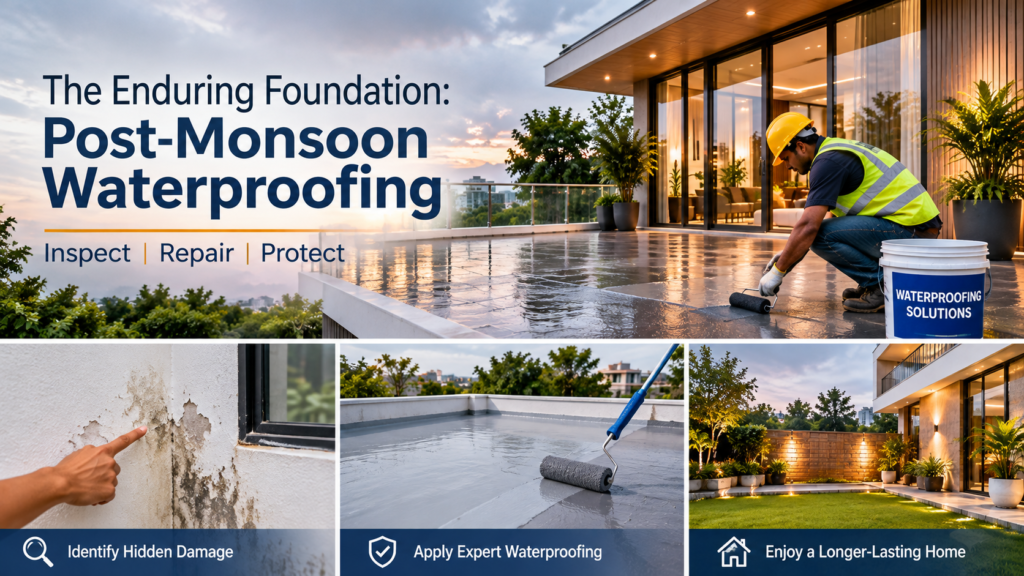
This is why post-monsoon waterproofing deserves attention. The period immediately after the rainy season offers a valuable opportunity to inspect your property, identify vulnerable areas and address water-related damage before it becomes more expensive to repair.
At GBS Creative Pvt. Ltd., we believe a well-designed building should be as durable as it is beautiful. From construction and interior spaces to outdoor areas and water features, protecting the structure from moisture is an important part of long-term building performance.
Why Post-Monsoon Waterproofing Matters
A building experiences repeated exposure to rainwater, humidity and changing temperatures during the monsoon. Even a small crack or weak joint can allow moisture to enter gradually.
The damage may not always be visible immediately. Water can travel through concrete, masonry and poorly sealed joints before appearing as a damp patch somewhere else.
Post-monsoon inspections help property owners identify these problems while they are still manageable.
Here are some important reasons to prioritise waterproofing after the rainy season:
- Prevent structural deterioration: Persistent moisture can affect concrete, reinforcement and masonry over time.
- Protect interior finishes: Dampness can damage paint, plaster, wallpaper, wooden flooring and furniture.
- Reduce mould and mildew: Moist environments encourage mould growth and unpleasant indoor odours.
- Avoid recurring repair costs: Addressing the source of leakage is usually more effective than repeatedly repainting damaged surfaces.
- Preserve property value: A dry, well-maintained building is easier to maintain and more comfortable to occupy.
Start with a Detailed Roof and Terrace Inspection
Roofs and terraces receive direct exposure to rainfall. During the monsoon, water may collect in low areas, enter small cracks or pass through damaged waterproofing layers.
Once the rainy season ends, inspect these surfaces carefully.
Look for:
- Cracks in the concrete surface
- Water ponding or slow drainage
- Damaged waterproofing membranes
- Loose tiles or deteriorating joints
- Leakage marks on the ceiling below
- Gaps around pipes, outlets and parapet walls
Terrace waterproofing should address the source of water entry rather than simply covering visible damage.
Depending on the condition of the surface, suitable solutions may include liquid-applied waterproofing coatings, membrane systems, crack treatment and improved drainage arrangements.
For projects involving larger outdoor spaces, waterproofing should also work alongside the overall design and construction plan. Explore GBS Creative’s construction and design solutions to understand its integrated approach to building projects.
Identify Dampness in Interior Walls and Ceilings
One of the most common post-monsoon problems is dampness inside the home.
You may notice:
- Yellow or brown patches on walls
- Paint bubbles or peeling surfaces
- White powdery deposits on plaster
- Musty smells in closed rooms
- Dark spots around windows and corners
- Damp ceiling areas beneath terraces or bathrooms
These symptoms can have different causes. Water may be entering from the exterior wall, travelling through a plumbing connection, or passing through a terrace or bathroom slab.
The correct treatment starts with identifying the source.
Applying fresh paint without fixing the underlying moisture problem may provide only temporary improvement. A proper inspection should determine whether the issue requires exterior wall sealing, plumbing repairs, joint treatment or a suitable waterproofing system.
Once the source has been addressed and the affected area has dried sufficiently, damaged plaster and paint can be repaired.
Give Bathrooms, Balconies and Utility Areas Special Attention
Bathrooms, balconies and utility spaces are exposed to water regularly, even outside the monsoon season.
In bathrooms, moisture can enter through poorly sealed floor-wall junctions, pipe penetrations, damaged grout or failed waterproofing beneath tiles.
Balconies may develop leakage around door thresholds, railing joints and drainage outlets. Utility areas can also experience water accumulation due to blocked drains or inadequate slopes.
A post-monsoon inspection should include:
- Floor and wall junctions
- Shower areas and bathroom corners
- Tile grout and silicone joints
- Balcony drainage outlets
- Door thresholds and window connections
- Plumbing points and pipe penetrations
Where required, waterproofing should be repaired before replacing tiles, plaster or other finishes. This helps prevent the same issue from returning after the next period of heavy rainfall.
Do Not Overlook the Building Foundation
The foundation supports the entire structure, yet it is often the least visible part of a property.
During the monsoon, surrounding soil can become saturated. Poor site drainage, water accumulation near external walls and inadequate ground-level protection may allow moisture to affect below-ground or ground-level areas.
Warning signs may include dampness near the bottom of walls, water entering basements, persistent moisture around plinth areas and deterioration of external finishes.
Foundation waterproofing depends on the building’s construction, soil conditions, drainage arrangement and the source of moisture. Possible measures include appropriate below-ground waterproofing systems, protective coatings, drainage improvements and treatment of vulnerable joints.
For new construction, these protections should be considered during the planning and construction stages. For existing buildings, a professional assessment can help determine whether the issue is related to groundwater, surface runoff, plumbing or another source.
Protect Exterior Walls from Rainwater Penetration
Exterior walls face continuous exposure to changing weather conditions. Cracks, damaged plaster, porous surfaces and poorly sealed openings can allow rainwater to penetrate.
Pay particular attention to:
- Hairline and larger wall cracks
- Window and door frame joints
- External pipe connections
- Wall-to-roof junctions
- Balcony edges and parapet walls
- Damaged exterior paint or protective coatings
The right treatment may involve crack filling, joint sealing, surface preparation and suitable exterior waterproof coatings.
However, not every damp wall needs the same solution. A wall affected by plumbing leakage requires a different repair approach from one exposed to driving rain.
Correct diagnosis helps avoid unnecessary coating work and repeated maintenance.
Check Drainage and Water Flow Around the Property
Waterproofing is not only about applying protective materials. Good drainage is equally important.
When rainwater cannot move away from a building efficiently, it can collect near foundations, enter low-lying spaces or place unnecessary pressure on vulnerable surfaces.
After the monsoon, check:
- Whether roof outlets are clear
- Whether rainwater pipes are securely connected
- Whether balcony drains work properly
- Whether the ground slopes away from the building
- Whether garden beds retain water near external walls
- Whether outdoor paving directs water towards the structure
Landscape design should consider water movement as carefully as planting, paving and aesthetics.
GBS Creative also works on outdoor environments through its landscape and terrace gardening solutions. Thoughtful planning can help outdoor spaces remain attractive while supporting practical drainage and maintenance requirements.
Choose the Right Waterproofing Solution
There is no single waterproofing product or method suitable for every building. The right choice depends on the location, surface condition, type of water exposure and severity of the problem.
Common waterproofing approaches include:
Liquid-applied waterproofing: These coatings create a continuous protective layer and can be useful for suitable roofs, terraces and exposed surfaces.
Waterproofing membranes: Sheet or membrane systems can provide protection across larger surfaces when installed with the correct detailing.
Cementitious waterproofing: Cement-based systems are used in selected wet areas and concrete applications, depending on the product specification.
Crack and joint sealing: Specialised fillers and sealants help close vulnerable gaps around joints, pipes and construction connections.
Drainage improvements: Correct slopes, outlets and water-disposal arrangements reduce water accumulation around buildings.
The selection and installation process should follow the manufacturer’s technical specifications and the actual site conditions. Surface preparation, curing, detailing and quality checks are just as important as the product itself.
Waterproofing and Interior Design Must Work Together
Waterproofing is often treated as a construction activity that happens before the interior work begins. In reality, it has a direct impact on the long-term performance of interior spaces.
Moisture can damage wall finishes, cabinetry, flooring, false ceilings and decorative elements. It can also disrupt the appearance and comfort of carefully designed rooms.
This is particularly important in bathrooms, kitchens, basements and rooms located below terraces.
At GBS Creative, the relationship between construction and interiors is important to creating spaces that look refined and perform well over time. Explore GBS Creative’s residential interior design services and commercial interior design solutions for more on its approach to functional and thoughtfully planned spaces.
A Practical Post-Monsoon Waterproofing Checklist
Before planning repairs, walk through the property and note areas that may need attention.
- Inspect the roof and terrace for cracks and standing water.
- Check ceilings for fresh or recurring leakage marks.
- Look for damp patches and peeling paint on interior walls.
- Examine bathrooms, balconies and utility areas.
- Check window frames, external joints and pipe connections.
- Inspect the foundation and plinth area for signs of moisture.
- Clear rainwater outlets and drainage channels.
- Review garden slopes and outdoor water flow.
- Photograph damaged areas to track changes.
- Arrange a professional inspection for persistent or unexplained leakage.
This simple review can help property owners prioritise repairs and plan maintenance before the next monsoon arrives.
Why Professional Assessment Makes a Difference
Water can travel through a building in unexpected ways. The damp patch visible inside a bedroom, for example, may originate from an exposed terrace, an exterior wall or a plumbing connection elsewhere.
That is why effective waterproofing begins with investigation rather than immediate application of a coating.
A professional assessment can help identify the source of leakage, evaluate the condition of the surface, recommend a suitable system and establish the correct repair sequence.
For major construction or renovation projects, waterproofing should be coordinated with structural work, plumbing, drainage and finishing activities. This integrated approach helps reduce the risk of overlooking vulnerable connections between different building elements.
Build a Stronger, Drier and More Enduring Property with GBS Creative
A building’s long-term strength depends on more than its visible finishes. The details beneath the paint, tiles and decorative surfaces play an equally important role.
Post-monsoon waterproofing gives property owners an opportunity to address moisture problems, protect important building elements and prepare their spaces for future weather conditions.
Whether you are planning a new construction project, renovating an existing property or improving your home’s interiors and outdoor spaces, GBS Creative Pvt. Ltd. brings design and construction considerations together.
Based in Ranchi, Jharkhand, GBS Creative works on projects across India, offering integrated solutions for construction, residential and commercial interiors, landscapes and outdoor environments.
Planning a construction or renovation project? Visit GBS Creative to explore its services and discuss how thoughtful planning can help protect and enhance your property.
A beautiful building catches the eye. A well-protected building stands the test of time.