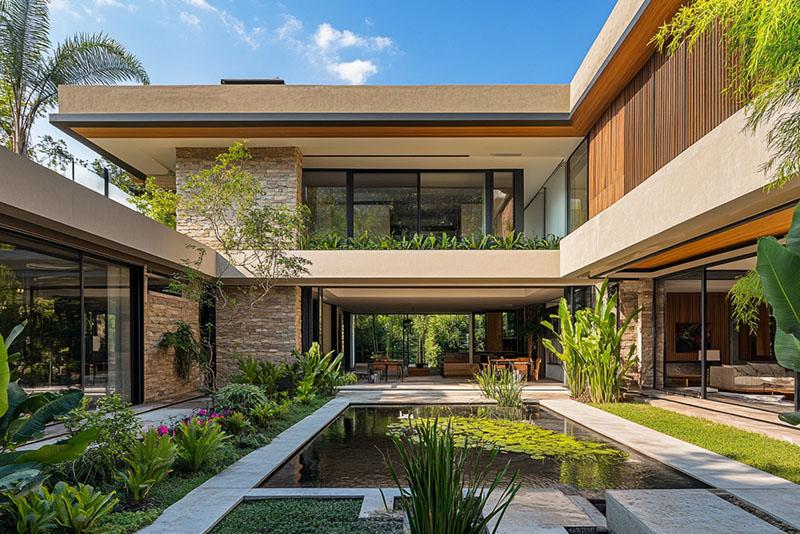
There is something calming about the sound of flowing water.
A fountain beside an entrance, a koi pond tucked into a landscaped courtyard, or a reflecting pool beside a contemporary building can change the way an entire space feels. The architecture seems softer. The surroundings feel more peaceful. Even a simple outdoor area can become a place where people naturally pause and spend time.
Water features have long been associated with tranquillity, beauty and prosperity. In modern architecture, however, their value goes beyond symbolism. When designed thoughtfully, they can improve the visual balance of a property, strengthen its connection with nature and create memorable outdoor experiences.
Water feature design is about bringing architecture, water, landscape and lighting together to create a space that feels balanced, welcoming and purposeful.
At GBS Creative Pvt. Ltd., based in Ranchi, Jharkhand and serving projects across India, aqua design and landscape planning can bring together fountains, ponds, swimming pools, lighting and surrounding finishes as part of a unified design approach.
Why Water Features Make Such a Powerful Architectural Statement
Imagine approaching a building and seeing a carefully designed fountain at its entrance. The water moves gently, the surrounding stonework complements the façade, and subtle lighting highlights the feature as evening approaches.
The entrance immediately feels more considered.
Water features can provide a focal point, introduce movement into static architecture and create a visual connection between buildings and their surroundings. They can also help establish a distinct identity for homes, hotels, resorts, commercial developments and public spaces.
The most successful designs do not simply add water wherever space is available. They consider the building’s proportions, circulation, landscape, materials and intended atmosphere.
A compact courtyard may benefit from a small wall fountain, while a spacious commercial entrance might accommodate a larger architectural water feature. The scale should feel appropriate to the property rather than competing with it.
The Connection Between Water Features and Prosperity
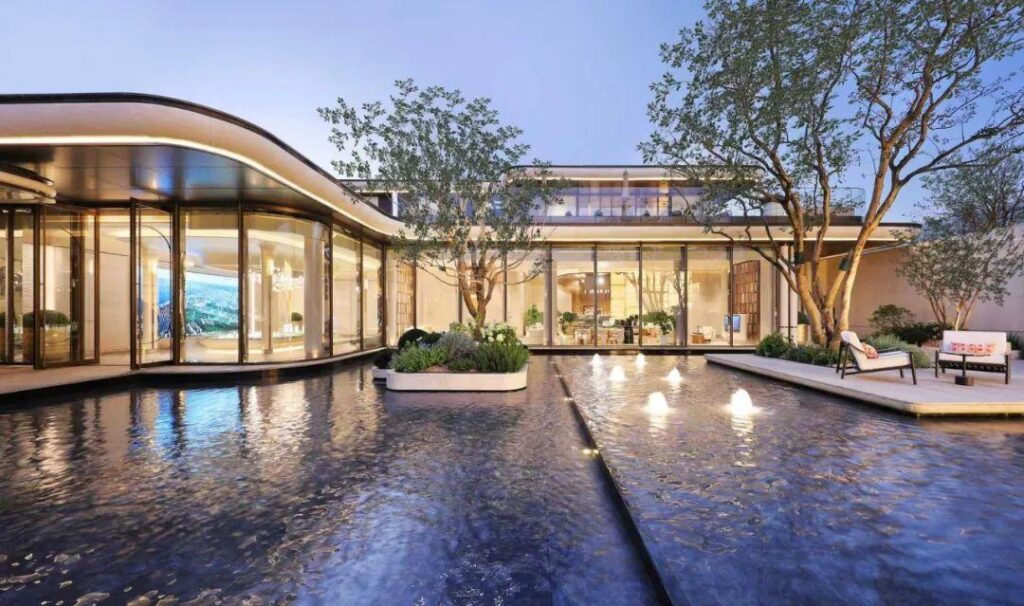
In many cultural traditions, flowing water represents abundance, renewal and positive energy. This association is particularly familiar in Vastu-inspired design, where the placement and movement of water are often considered when planning homes and outdoor environments.
For homeowners who value these traditions, a fountain or pond may have symbolic significance in addition to its aesthetic appeal.
However, prosperity should not be presented as a guaranteed outcome of installing a water feature. Its practical benefits depend on thoughtful design, appropriate placement, maintenance and how people experience the space.
A well-planned water feature can make an entrance more inviting, create a peaceful garden retreat and enhance the overall presentation of a property. Those are tangible design benefits that can be enjoyed regardless of personal beliefs.
Choosing the Right Water Feature for Your Property
Different water features create different experiences. The best choice depends on the architecture, available space, budget and maintenance requirements.
Architectural Fountains
<AsyncImage query=”contemporary architectural courtyard fountain elegant stone building landscaped luxury entrance” aspectRatio=”16:9″ width=”100%” />
Architectural fountains are ideal when you want water to become a deliberate design statement.
They can be placed near building entrances, in courtyards, beside reception areas or within landscaped gardens. Contemporary designs often use geometric forms, stone finishes and controlled water movement to complement modern architecture.
For hotels, offices and commercial properties, a well-positioned fountain can help create a distinctive arrival experience.
Koi Ponds and Reflecting Ponds
<AsyncImage query=”luxury landscaped garden koi pond natural stone edging ornamental fish lush planting modern house” aspectRatio=”16:9″ width=”100%” />
A koi pond introduces a more natural character. Fish movement, reflections, planting and the sound of circulating water can make a garden feel alive without overwhelming its surroundings.
Reflecting ponds offer a different effect. Their calm surfaces can mirror trees, façades and the sky, making them especially effective beside minimalist architecture or landscaped courtyards.
Both require careful planning. Pond depth, filtration, water quality, circulation, fish welfare and maintenance access should be considered before construction.
For inspiration, explore GBS Creative’s koi pond and aquascape design, which connects water features with the wider landscape.
Water Walls and Cascading Features
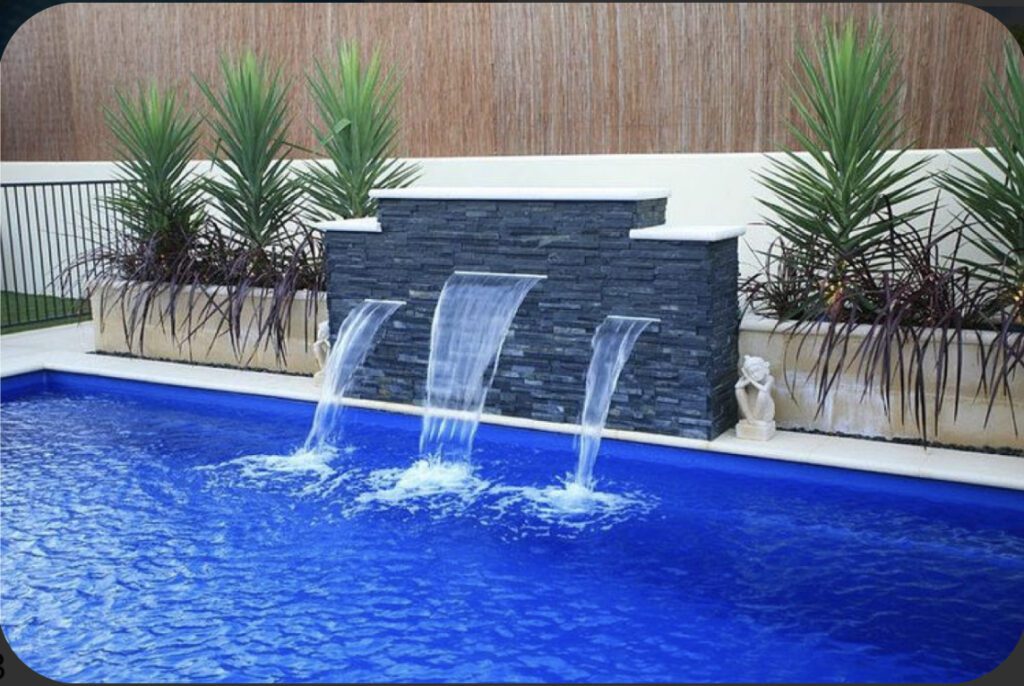
Water walls create a contemporary effect by allowing water to flow across a vertical surface.
They can work well in entrance courtyards, garden boundaries, hotel lobbies and outdoor seating areas. Their vertical form can also help make compact spaces feel more designed without requiring a large pond.
The sound of the water should suit the setting. A quiet residential courtyard may call for a gentle flow, while a larger public or hospitality environment may accommodate a more dramatic cascade.
Swimming Pools and Integrated Water Features
A swimming pool can become part of the architectural composition rather than a separate recreational addition.
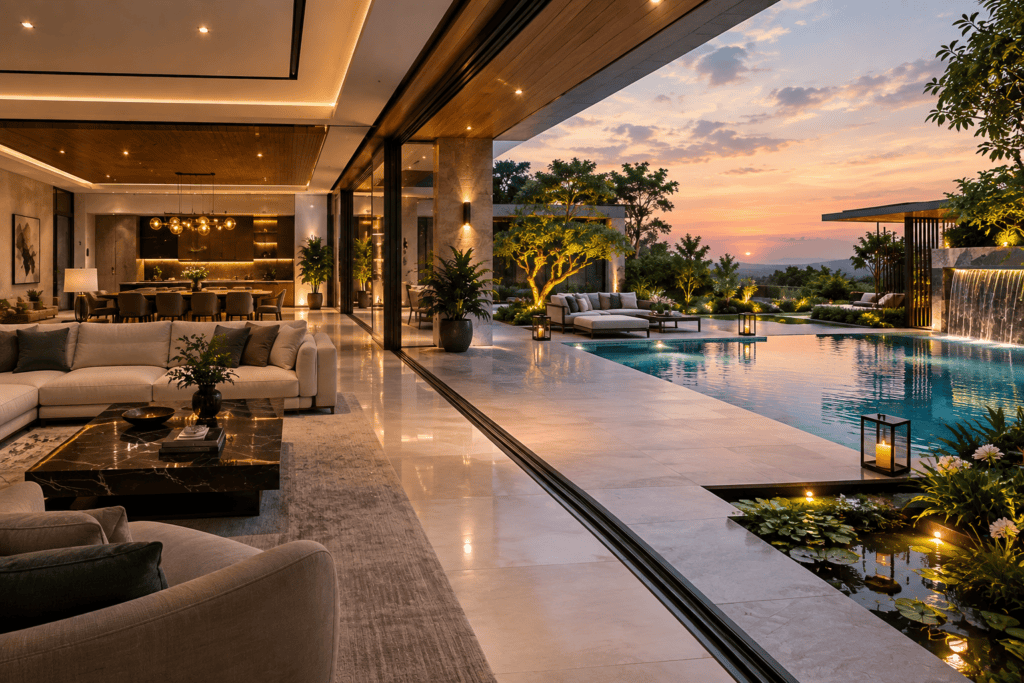
Infinity edges, integrated fountains, underwater lighting and carefully planned poolside landscaping can create a cohesive outdoor environment.
GBS Creative’s swimming pool design and construction services provide a relevant starting point for projects where pool structures, finishes, filtration, lighting and surrounding outdoor areas need to work together.
Where Should a Water Feature Be Placed?
Placement can determine whether a water feature feels natural or out of place.
At a residential entrance, it may establish a welcoming focal point. In a courtyard, it can create a centre around which planting and seating are arranged. In a hotel or commercial development, it may help visitors orient themselves while reinforcing the building’s identity.
Before deciding on a location, consider:
- Visibility: Can the feature be appreciated from important viewpoints, such as the entrance, living room or reception?
- Movement: Will it obstruct pathways, entrances or accessible routes?
- Scale: Does it complement the size and proportions of the building?
- Sunlight and shade: Will exposure affect algae growth, water temperature or maintenance?
- Drainage: Can overflow and surrounding surface water be managed properly?
- Services: Is there suitable access to electricity, plumbing and filtration equipment?
- Maintenance: Can the feature be cleaned and serviced without disrupting the property?
For people following Vastu principles, placement preferences may also influence the design. These should be considered alongside practical requirements, site conditions and applicable safety considerations.
How Landscape Design Completes the Picture
A fountain rarely looks its best when the surrounding landscape is treated as an afterthought.
Planting, pathways, paving, seating and architectural details help establish the setting in which the water feature sits.
For example, a modern building might pair a geometric fountain with structured planting, clean stone paving and restrained greenery. A villa garden could use natural stone, layered plants and a koi pond to create a softer atmosphere.
The objective is to create visual harmony without making every element identical.
GBS Creative’s landscape design approach brings planting, hardscape, outdoor features and lighting into the broader design conversation. This is particularly useful when a water feature needs to connect with a terrace, garden, swimming pool or building entrance.
Architectural Lighting Makes Water Features Come Alive at Night
A water feature that looks beautiful during the day can become a completely different focal point after sunset.
Carefully positioned lighting can highlight the movement of water, reveal stone textures and create reflections across a pond or pool. It can also connect the feature with the building’s façade and surrounding landscape.
Consider using:
- Underwater lighting designed for the specific installation
- Accent lighting to highlight surrounding plants
- Soft illumination around pathways and seating
- Architectural lighting that complements the building
- Appropriate lighting controls for different evening settings
The aim is to create depth rather than excessive brightness. Too much light can flatten the scene, create glare or distract from the architecture.
Electrical installations around water require suitable equipment, correct protection and qualified installation. Lighting should be planned alongside the hydraulic and construction requirements, not added as an afterthought.
The Engineering Behind a Beautiful Water Feature
The visible design is only one part of the project. Reliable operation depends on the systems behind it.
A well-planned water feature may require structural preparation, waterproofing, pumps, filtration, circulation, drainage and access for maintenance.
The requirements vary according to the type and scale of the installation. A small decorative fountain is different from a koi pond, a cascading water wall or a large commercial installation.
Ignoring these details can lead to water loss, pump problems, poor water quality, excessive maintenance or damage to surrounding construction.
For rooftop gardens, terraces and elevated courtyards, waterproofing and drainage deserve particular attention because the feature sits above or beside occupied building areas.
This is why water feature design should involve coordination between design, construction and technical planning from the beginning.
Water Features for Homes, Hotels and Commercial Buildings
Serene water features can suit many different environments, but the design should respond to the people who use them.
Luxury homes: A courtyard fountain or koi pond can create a private retreat and a distinctive view from indoor living spaces.
Hotels and resorts: Larger fountains and reflecting pools can contribute to a memorable arrival experience and strengthen the property’s visual identity.
Corporate buildings: Carefully placed water features can enhance entrances, courtyards and landscaped visitor areas.
Restaurants and clubs: A fountain or water wall can help establish ambience in outdoor dining areas and social spaces.
Public and institutional environments: Durable materials, safe circulation, efficient water management and straightforward maintenance are particularly important.
The best solution is not necessarily the largest or most expensive one. It is the one that fits the architecture and serves the purpose of the space.
Sustainable Water Feature Design
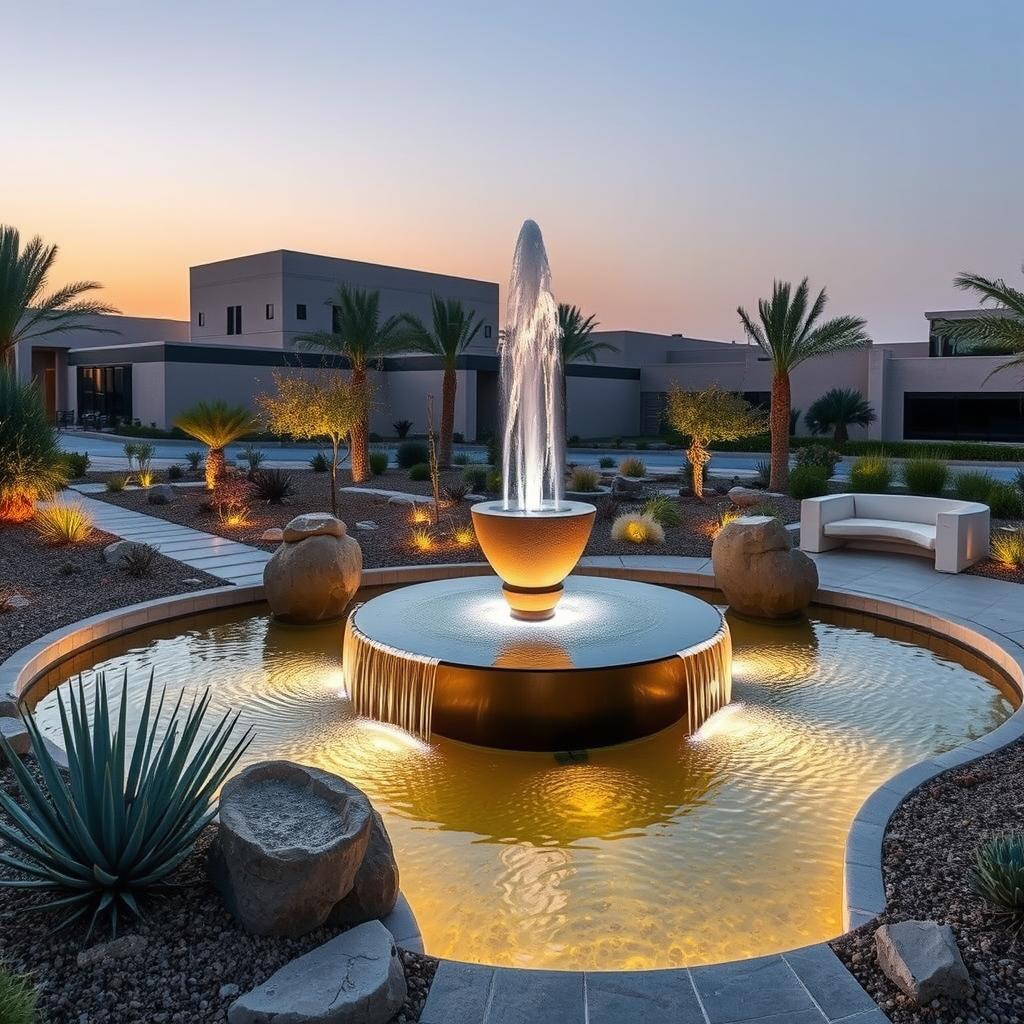
Water adds beauty, but it also requires responsible resource management.
When planning a water feature, consider recirculating systems, appropriately sized pumps, efficient filtration, accessible maintenance equipment and controls that avoid unnecessary operation.
A properly designed recirculating fountain can reuse its water rather than continuously drawing fresh supplies, although evaporation, splashing and cleaning still require occasional replenishment.
The size and design of the feature should also reflect the owner’s willingness to maintain it.
For ponds, water quality and filtration must suit the plants or aquatic life involved. For fountains, pumps and nozzles should be selected for the desired effect rather than oversized without reason.
Sustainability is not only about the equipment. It also means choosing a design that can operate reliably over time.
Why an Integrated Design Approach Matters
Water features sit at the intersection of several disciplines.
Architecture determines their relationship with the building. Landscape design shapes their surroundings. Lighting establishes the evening atmosphere. Construction and waterproofing help protect the structure. Hydraulic systems keep the water moving and clean.
When these decisions are made separately, coordination problems can appear during installation.
An integrated design approach allows the feature, surrounding finishes, drainage, lighting and maintenance access to be considered together. This can reduce avoidable changes and help the finished space feel more cohesive.
At GBS Creative Pvt. Ltd., the broader combination of construction, interiors, landscape design, aqua design and lighting supports this joined-up approach to residential, commercial and hospitality projects.
Creating Serene Water Features in Ranchi and Across India
Every location brings different design considerations. Climate, water availability, site conditions, local architecture and maintenance requirements all influence the right solution.
For a project in Ranchi, Jharkhand, or elsewhere in India, water feature planning should reflect the actual property rather than simply reproduce a design seen in a photograph.
A compact courtyard may need a modest focal point. A large villa might support a koi pond and landscaped seating area. A hotel entrance may benefit from a more prominent architectural fountain.
The design should be beautiful, technically practical and appropriate to its setting.
A Thoughtful Feature Can Transform the Entire Space
A water feature does not need to dominate a property to make an impact.
Sometimes, a small fountain beside the entrance is enough to change the mood. Sometimes, a reflecting pond creates a stronger connection between architecture and landscape. In other spaces, a carefully illuminated pool or cascading water wall becomes the defining feature.
The difference lies in how thoughtfully the elements work together.
When water, planting, materials, architecture and lighting are planned as one composition, the result can feel calm, welcoming and enduring.
At GBS Creative Pvt. Ltd., the aim is to create connected environments in which every design element has a purpose.
Because the true value of a serene water feature is not just the water itself. It is the atmosphere, identity and sense of balance it brings to the space around it.