
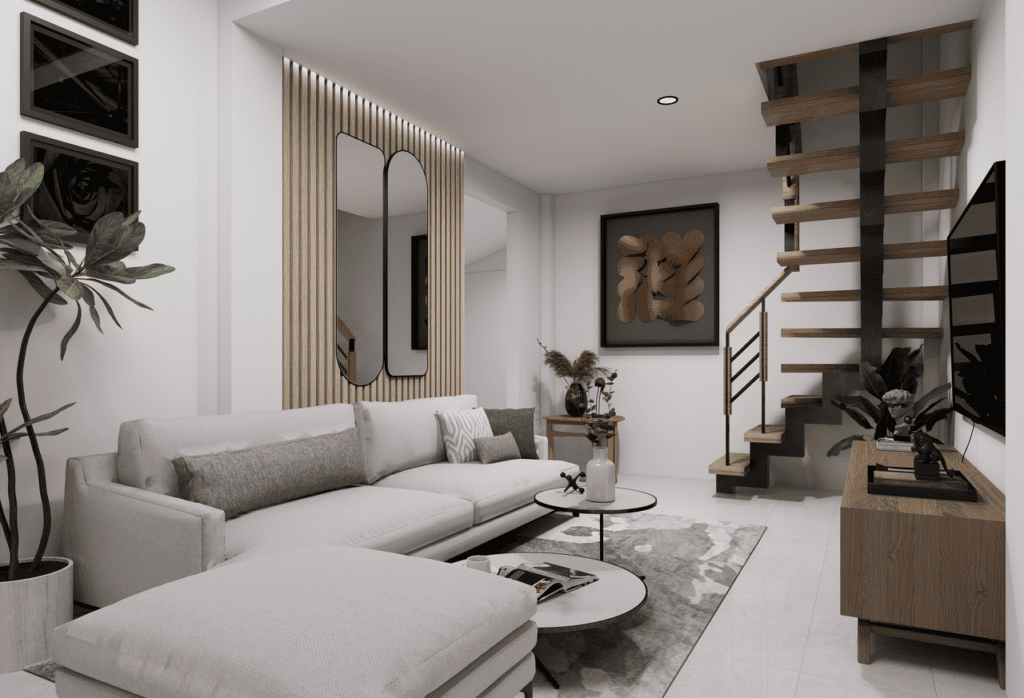
2026 Residential Interior Design Trends Shaping Indian Homes
Ten years ago, an Indian living room had a fixed script. A three-seater sofa facing a wall-mounted television. A glass-top center table. A showcase unit crowded with wedding photographs and porcelain figurines nobody dusted. It worked, because the home had one job: to look presentable when the relatives came over. That script has been thrown out. When we walk through our sites in Ranchi today, we’re rarely asked to build a “showpiece” home anymore. A client in her thirties, working remotely for a Bangalore-based firm from her family house in Jharkhand, wants a study nook that doesn’t feel like an afterthought. A joint family in Patna wants a kitchen island where three generations can actually cook at once without stepping on each other. The Indian home in 2026 is being asked to hold work, rest, ritual, and rebellion, sometimes in the same 900 square feet. This shift is what’s driving every trend on this list. Below, we break down the five design movements we’re seeing most often on our project sites across India this year – from the client’s first phone call to the final coat of lime wash. Trend 1: Cozy Minimalism Replaces Stark Minimalism Cozy minimalism in 2026 combines a restrained, clutter-free layout with warm materials, tactile textures, and soft, layered lighting. Unlike the cold, all-white minimalism of the last decade, this approach keeps surfaces calm but integrates natural fabrics and earthy tones so the home never feels sterile. For years, minimalism in India meant borrowing a Scandinavian rulebook that didn’t account for our climate, our monsoons, or our need to keep forty guests’ worth of extra bedding somewhere. Cozy minimalism fixes that. It keeps the discipline of fewer objects but brings back warmth through material choice. The goal is a home that photographs well and feels even better at 11 PM on a humid night. “A minimal home in India cannot be a cold home -our clients want fewer things, not fewer feelings. We achieve this by layering textures rather than just adding more objects.” Lead Design Team, GBS Creative What this looks like on site: How to Apply This in an Apartment Start with your living room wall behind the TV or sofa. Swap a busy wallpaper or dark accent for a hand-applied lime wash finish – it has a subtle, cloud-like texture that a flat paint job simply cannot fake. Add one textured throw and a jute or seagrass rug to ground the space. Trend 2: Material Drenching in Earthy, Regional Palettes Material drenching is the practice of applying a single material or color across walls, trim, ceiling, and sometimes built-in furniture to create an immersive, cocoon-like room. Indian homeowners are currently drenching rooms in deep, regional tones like Jharkhand red laterite, indigo, and terracotta. Walk into a fully drenched room and the effect is immediate. There is no visual break between the wall and the ceiling, so the space feels larger and more intentional at once. It’s a technique that reads as confident rather than cautious. We are seeing this most in home offices and primary bedrooms – spaces where the homeowner wants a specific mood, not just a color. Popular drenching palettes this year: How to Apply This in an Apartment Pick your smallest room – a study, a powder bathroom, or a reading nook – and drench it first. It is the lowest-risk way to test the technique before committing a full bedroom to it. Keep trims, switchboards, and skirting in the same color family so nothing interrupts the wash of color. Trend 3: Reclaimed Indian Hardwood and Slow Craftsmanship Reclaimed hardwood particularly Indian Rosewood (Sheesham), old teak from demolished havelis, and salvaged railway sleeper wood – is being repurposed into furniture and paneling. Homeowners are moving away from factory-finished laminates in favor of sustainable materials with a documented history. There is a particular smell reclaimed teak carries – a dry, slightly smoky note that new veneer never has. Clients notice it the moment a piece is delivered to the site, and it is usually the moment they stop thinking of the furniture as “furniture” and start thinking of it as something with history. This ties closely into a broader move toward slow craftsmanship: hand-carved jaali (lattice) screens, hand-block printed textiles from Bagru, and Channapatna wood toys used as decor accents instead of imported plastic ornaments. “Every scratch on a piece of reclaimed teak is proof it survived something. That is not a flaw; that is the whole point of buying it.” Material Sourcing Team, GBS Creative How to Apply This in an Apartment You don’t need to reclaim a whole house’s worth of wood to get the effect. One statement piece – a console table, a headboard, or a set of jaali room dividers – using reclaimed or hand-finished wood is enough to anchor an otherwise modern room. Trend 4: Multi-Generational Zoning Over Open-Plan Living Multi-generational zoning designs a home around distinct activity zones – a quiet reading corner, an active kitchen island, a private prayer nook – rather than one large undivided open-plan space. This uses soft barriers like half-height partitions and furniture arrangements to separate functions without sacrificing airflow. Open-plan living, borrowed heavily from Western design media, assumes a smaller household with highly predictable daily rhythms. It rarely survives contact with an actual Indian joint family the chaos of a grandmother’s afternoon TV serial competing with a teenager’s online class and a toddler’s nap time in the same open hall. What we are building instead in 2026 are homes with soft zoning that do the work that walls used to do. Common zoning tools we use on site: Trend 5: Climate-Responsive, Regionally Rooted Design Climate-responsive design prioritizes materials and layouts suited to local weather conditions. This includes using breathable lime plaster and jaali cross-ventilation in humid regions, and thermally efficient stone flooring like Kota in warmer states, marking a return to indigenous architectural wisdom. Jharkhand’s summers are punishing, and the cooling touch of a lime-washed wall on a
2026 Residential Interior Design Trends Shaping Indian Homes Read More »