A bedroom is more than a place to sleep. It is where the day begins, where you unwind after a demanding schedule, where you read, relax and enjoy moments of privacy. The way this space is illuminated has a significant influence on how it feels and functions.
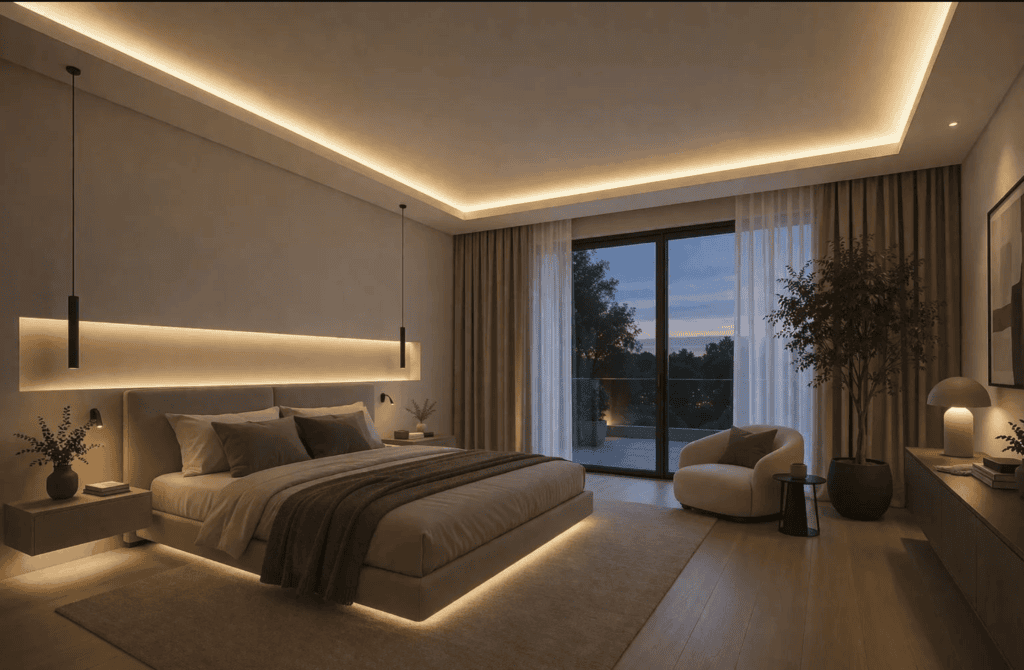
Imagine entering a bedroom with a single bright ceiling light. The room may be adequately illuminated, but it can feel flat, harsh and lacking in character. Now imagine soft ceiling illumination, warm bedside lamps, subtle cove lighting, a beautifully highlighted headboard and a gentle glow around the curtains. The same bedroom suddenly feels more inviting, layered and thoughtfully designed.
This is the difference that layered bedroom lighting can make.
Good bedroom lighting design is not about installing as many fixtures as possible. It is about combining different types of light to create the right atmosphere, improve functionality and highlight the room’s architectural details.
At GBS Creative Pvt. Ltd., we believe that lighting should be considered an essential part of interior design rather than a finishing touch. Here are seven important layers that can transform an ordinary bedroom into a comfortable and visually balanced retreat.
Why Is Layered Lighting Important in Bedroom Design?
Every bedroom serves multiple purposes. You may need bright lighting when getting ready, focused illumination while reading and soft, relaxing light before going to sleep.
One lighting source cannot comfortably serve all these activities.
Layered lighting creates flexibility by combining different light sources, each with a specific purpose. It also adds depth to the interior by creating variations in brightness, shadows and visual focus.
A well-planned bedroom lighting design can help:
- Create a relaxing atmosphere for rest and sleep.
- Improve visibility for reading, dressing and everyday activities.
- Highlight textures, furniture and architectural details.
- Make a small bedroom appear more spacious and inviting.
- Reduce dependence on a single harsh overhead light.
- Give you greater control over the mood and functionality of the room.
Let’s explore the seven layers that bring these benefits together.
Ambient Lighting: The Foundation of Bedroom Illumination
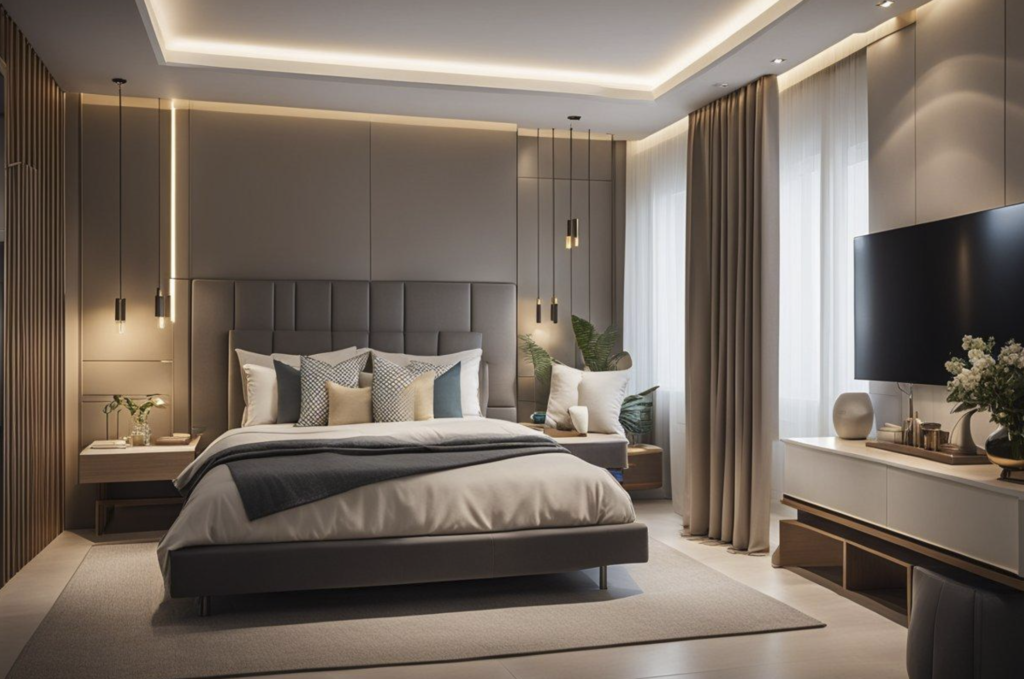
Think of it as the foundation on which all other lighting layers are built.
Ambient lighting is the primary source of illumination in a bedroom. It provides general, evenly distributed light so that the entire space remains comfortable to move around in.
Common ambient lighting options include:
- Recessed ceiling lights
- Surface-mounted ceiling fixtures
- False ceiling lights
- Flush-mount lights
- Cove lighting with concealed LED strips
For a modern bedroom, recessed lights or concealed cove lighting can create a clean and elegant appearance. A decorative ceiling fixture can also become a focal point, particularly in larger bedrooms.
The key is to avoid excessive brightness. Ambient lighting should illuminate the room without making it feel clinical or uncomfortable.
Warm white lighting is often a suitable choice for bedrooms because it creates a softer and more relaxing atmosphere. The ideal colour temperature depends on the room’s finishes, personal preferences and lighting scheme.
Task Lighting: Focused Light for Everyday Activities
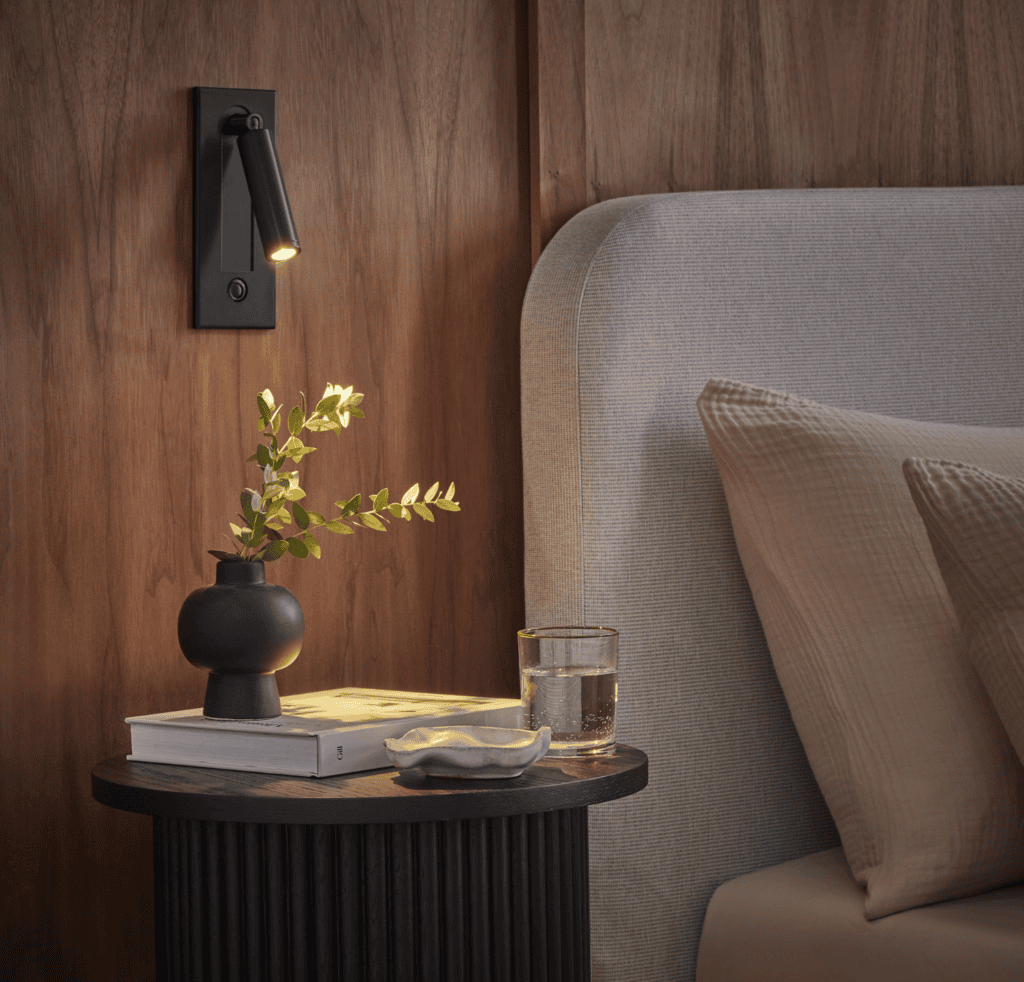
Bedrooms are not used only for sleeping. Many people read before bed, work at a small desk, apply makeup or spend time organising their belongings.
Task lighting provides focused illumination for these specific activities.
Popular bedroom task lighting options include:
- Adjustable bedside reading lamps
- Wall-mounted reading lights
- Study table lamps
- Dressing table lights
- Wardrobe interior lighting
For bedside reading, adjustable wall lights are particularly useful. They direct light towards the book without unnecessarily illuminating the entire bedroom.
If your bedroom includes a dressing table, lighting around the mirror can improve visibility. Choose fixtures that provide balanced illumination and minimise unwanted shadows.
Task lighting should be positioned according to how the furniture and space will actually be used. This is why lighting placement should be planned alongside the bedroom layout.
Accent Lighting: Highlighting the Details That Matter
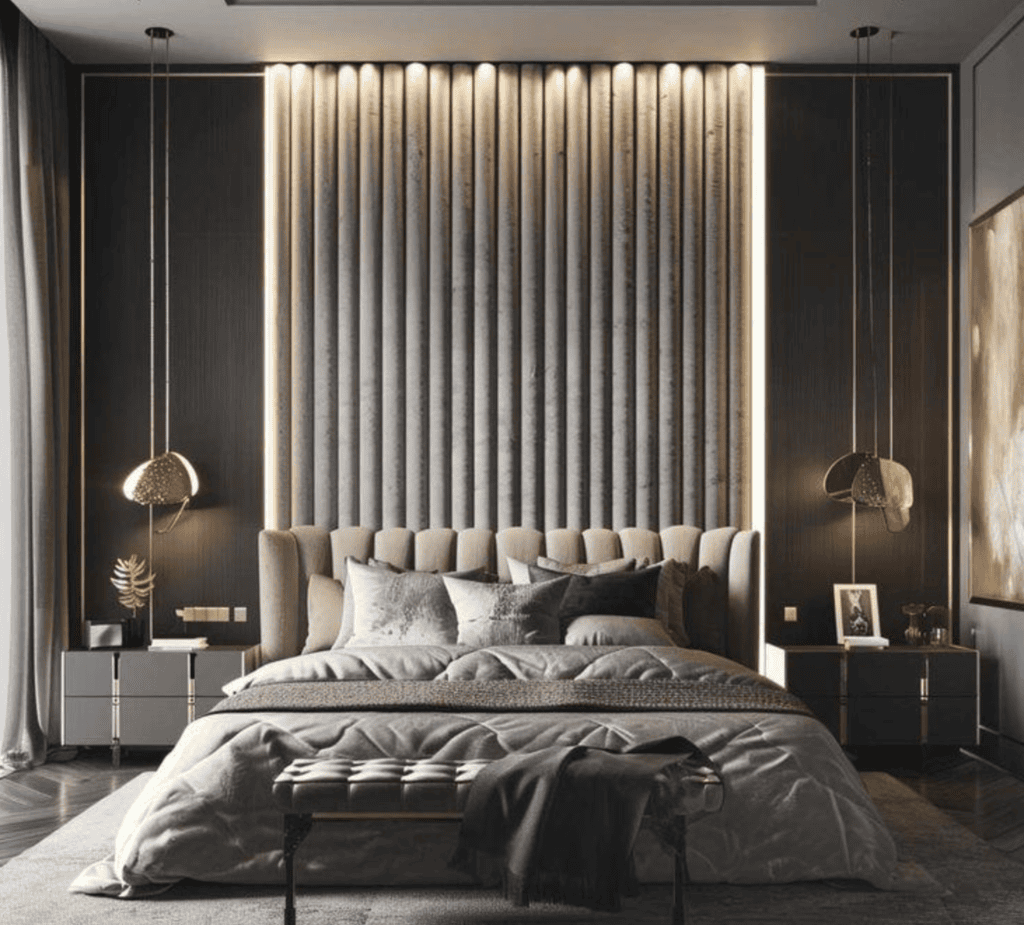
Some bedroom features deserve more attention than others.
A textured wall, decorative artwork, a statement headboard or an interesting architectural detail can become a visual highlight when illuminated correctly.
This is where accent lighting makes a difference.
Common accent lighting applications include:
- Spotlights directed towards artwork
- Wall washers for textured surfaces
- LED strips behind decorative panels
- Picture lights
- Small directional ceiling lights
Accent lighting adds depth and contrast. Instead of illuminating everything equally, it draws attention to selected elements and creates visual interest.
For example, a spotlight directed towards a textured wall can bring out its surface details. Similarly, concealed lighting behind a headboard can create a subtle floating effect.
The objective is not to make every feature stand out. Selective illumination creates a more refined result.
Cove Lighting: Adding Softness and Architectural Depth
Cove lighting is one of the most popular modern bedroom lighting ideas, especially in interiors featuring false ceilings or layered ceiling designs.
It uses concealed LED strips placed within a recessed ceiling detail or architectural cove. The light is directed towards the ceiling or an adjacent surface, producing a soft and indirect glow.
Unlike a visible ceiling fixture, cove lighting creates a more subtle lighting effect.
It works particularly well for:
- False ceiling designs
- Perimeter ceiling illumination
- Headboard wall details
- Recessed architectural features
- Creating a gentle evening atmosphere
Cove lighting can make the ceiling appear visually lighter and introduce a sense of depth into the room.
For a comfortable bedroom, warm white LEDs are often preferred. Dimmable controls can make the lighting more versatile, allowing you to adjust brightness throughout the day.
However, cove lighting should be designed with proper access for maintenance, suitable heat management and concealed wiring.
Decorative Lighting: Where Function Meets Personality
Lighting fixtures can also serve as decorative elements.
A carefully selected pendant light, chandelier or designer wall sconce can complement the bedroom’s furniture, materials and overall interior theme.
Decorative bedroom lighting options include:
- Pendant lights beside the bed
- Contemporary chandeliers
- Designer wall sconces
- Sculptural table lamps
- Statement ceiling fixtures
For example, pendant lights on either side of a bed can create a balanced composition while freeing up space on bedside tables.
In a contemporary bedroom, simple geometric fixtures may work beautifully. In a more luxurious interior, metallic finishes, glass details or sculptural forms can add character.
The important thing is to select fixtures that complement the interior rather than compete with it.
Consider the fixture’s scale, hanging height, material and light output before making a final decision.
Wardrobe and Functional Lighting: Making Storage More Practical
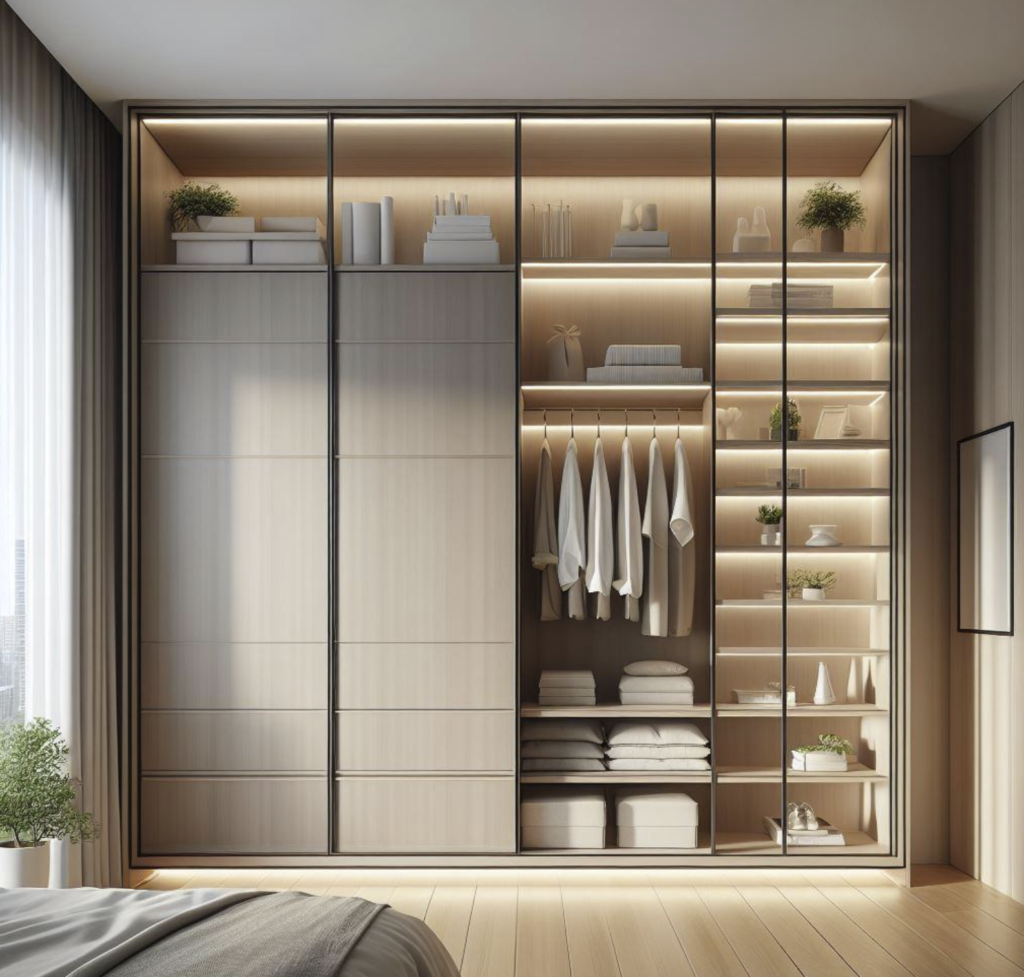
Wardrobes and storage areas are often overlooked when planning bedroom lighting.
A beautifully designed wardrobe can still be inconvenient if its interiors are poorly illuminated. Searching for clothes, accessories or personal belongings becomes difficult when shelves and hanging sections remain dark.
Integrated wardrobe lighting solves this problem.
Useful options include:
- LED strip lighting inside wardrobe sections
- Motion-sensor cabinet lights
- Vertical lights beside wardrobe doors
- Illuminated display shelves
- Lighting around dressing mirrors
Motion-sensor lights are especially practical because they switch on when the wardrobe is opened and turn off when it is closed, depending on the selected system.
For a premium finish, concealed LED profiles can be integrated into wardrobe shelves and panels.
Functional lighting should be planned during furniture design and electrical layout preparation. This allows wiring, drivers and switches to be accommodated neatly without compromising the appearance of the cabinetry.
Mood Lighting: Creating the Perfect Evening Atmosphere
The final layer brings everything together.
Mood lighting is about creating an atmosphere that suits the moment. After a long day, you may not want bright ceiling lights. Instead, a gentle bedside glow or softly illuminated headboard can make the bedroom feel more peaceful.
Some effective mood lighting options include:
- Dimmable bedside lamps
- Warm LED strips behind the headboard
- Low-level floor lighting
- Soft cove illumination
- Smart lighting systems with adjustable scenes
Smart lighting controls can make this experience even more convenient. With compatible systems, you can create different lighting scenes for reading, relaxing, getting ready or preparing for sleep.
For example:
Morning scene: Brighter, comfortable illumination for getting ready.
Reading scene: Focused bedside lighting with moderate ambient light.
Evening scene: Warm, dimmed ambient and accent lighting.
Night scene: Very low-level illumination for moving around without switching on bright ceiling lights.
Mood lighting should remain comfortable and subtle. Its purpose is to support relaxation, not create unnecessary visual distractions.
How to Combine All 7 Layers in One Bedroom
The seven layers do not need to be installed as seven separate fixtures. Some lighting elements can serve more than one purpose, depending on their placement and controls.
A practical bedroom lighting plan may look like this:
| Lighting layer | Suggested application | Main purpose |
|---|---|---|
| Ambient | Recessed ceiling lights | General illumination |
| Task | Adjustable bedside lamps | Reading and focused activities |
| Accent | Wall spotlights | Highlighting artwork and textures |
| Cove | Concealed ceiling LED strips | Soft indirect illumination |
| Decorative | Pendant lights or sconces | Style and visual character |
| Functional | Wardrobe LED lighting | Better visibility in storage |
| Mood | Dimmable warm lighting | Relaxation and atmosphere |
The best combination depends on the bedroom’s size, ceiling height, furniture arrangement, natural light and personal preferences.
In a compact bedroom, a few carefully selected lighting elements may be more effective than installing numerous fixtures. In a larger master bedroom, additional accent and decorative lighting can help define different areas.
Common Bedroom Lighting Mistakes to Avoid
Even expensive lighting fixtures cannot compensate for poor planning. A few common mistakes can affect both comfort and the final appearance of the room.
1. Depending on one ceiling light
A single overhead fixture often creates uneven illumination and leaves the bedroom without depth. Combine general lighting with task and accent sources.
2. Choosing lighting that is too bright
Excessively bright lighting can make a bedroom feel harsh. Use suitable brightness levels and dimming controls wherever practical.
3. Ignoring bedside lighting
Reading, relaxing and using the bedside area become less convenient without appropriately positioned lights.
4. Using inconsistent colour temperatures
Mixing very warm and cool white lights without a clear design intention can make the room feel visually disconnected. Choose a coordinated lighting palette.
5. Forgetting wardrobe and dressing areas
These spaces require functional illumination, not just decorative lighting.
6. Planning lighting after the interiors are completed
Late lighting decisions can lead to visible wiring, inconvenient switches and unnecessary modifications. Coordinate the lighting plan with furniture, ceiling and electrical layouts from the beginning.
The Role of Lighting in a Well-Designed Bedroom
Beautiful bedroom interiors are created through the relationship between multiple design elements.
Lighting interacts with wall colors, flooring, furniture, ceiling details, fabrics and natural materials. A warm light can make wooden finishes feel richer, while carefully positioned accent lights can bring out the texture of stone, fabric or decorative wall panels.
This is why lighting should be integrated into the complete interior design process.
At GBS Creative Pvt. Ltd., we approach interior spaces with attention to functionality, visual balance and execution. From layout planning and material selection to lighting coordination and finishing details, every element contributes to the final experience.
Explore our residential interior design services to discover how thoughtful planning can transform everyday living spaces.
For more design inspiration and ideas, visit the GBS Creative blog collection.
Create a Bedroom That Feels as Good as It Looks with GBS Creative
A well-designed bedroom does not need to be filled with elaborate fixtures or complicated lighting systems. What matters is how thoughtfully each light source is selected, positioned and controlled.
The seven layers of bedroom lighting offer a practical way to create a space that adapts to your daily routine. Ambient lighting provides the foundation, task lighting supports everyday activities, accent lighting adds depth, and mood lighting creates an atmosphere that encourages relaxation.
When these elements work together, even a simple bedroom can feel more comfortable, elegant and complete.
Planning a bedroom makeover or a new home interior? Connect with GBS Creative Pvt. Ltd. for thoughtfully planned interior design and construction solutions.
Because the right lighting does more than brighten a room. It changes how you experience it.