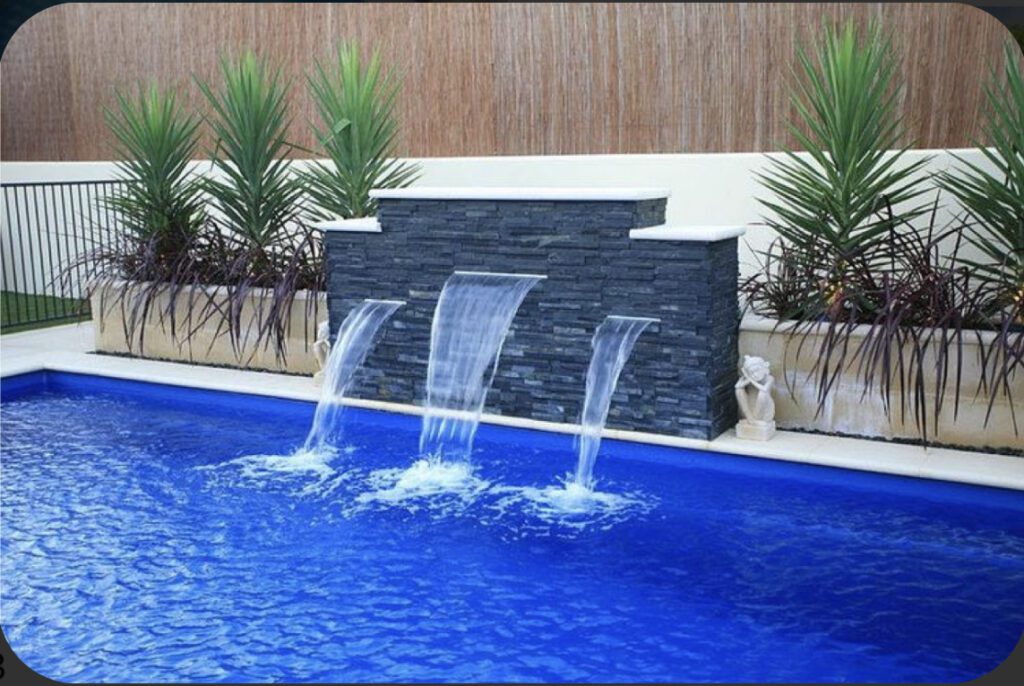
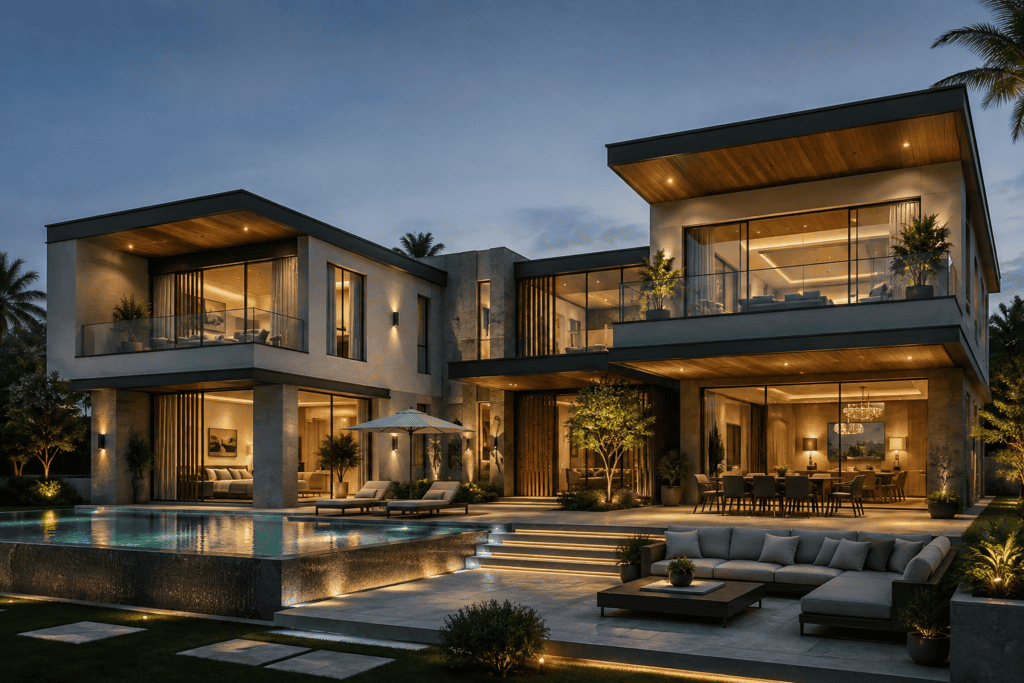
It should feel effortless when you walk through it. Morning light should enter naturally. Storage should be where you need it. The living room should feel open without feeling empty. Materials should look refined but still work with everyday life.
That is the difference between decorating a villa and designing a villa.
For a luxury home, some interior design decisions are simply not worth compromising on. These are the details that influence comfort, functionality, longevity, and the overall character of the property.
At GBS Creative Pvt. Ltd., based in Ranchi, Jharkhand and working across India, we approach residential interior design as part of a larger design-build experience. Architecture, interiors, lighting, landscape, pools, ponds, and outdoor spaces should complement one another rather than feel like separate projects.
Here are five interior design non-negotiables that can make a modern villa feel genuinely considered.
1. A Thoughtful Space Plan Comes Before Beautiful Furniture
One of the biggest mistakes in villa interiors is starting with furniture, colours, or decorative finishes before deciding how people will actually use the space.
A luxury interior needs a functional space plan first.
Ask simple questions:
- How will people enter and move through the house?
- Where will guests sit?
- How much privacy does each bedroom need?
- Where should the dining area connect to the kitchen?
- Can the living room open naturally toward the garden or pool?
- Where will everyday storage go?
- Are circulation paths comfortable?
- Which rooms need more natural light?
These decisions determine whether a home feels spacious or awkward.
A large villa can still feel cramped if rooms are poorly connected. Conversely, a carefully planned floor layout can make a smaller space feel generous.
Open Plan Doesn’t Mean Everything Has to Be Open
Modern villa design often uses open-plan living, but that does not mean removing every wall.
The best layouts create visual connections while maintaining functional zones.
For example, a living room may flow into a dining space while furniture, ceiling treatments, flooring, or lighting subtly define each area.
This creates openness without losing identity.
2. Lighting Must Be Designed With the Interior
If there is one element that can completely change an interior without changing its architecture, it is lighting.
A room with expensive furniture can still feel ordinary under harsh, poorly positioned lights.
Good interior lighting design uses layers.
Ambient Lighting
This provides general illumination through ceiling lights, recessed downlights, or indirect lighting.
Task Lighting
This focuses on activities such as cooking, reading, dressing, working, or applying makeup.
Accent Lighting
This highlights artwork, textured walls, architectural details, furniture, or decorative objects.
Decorative Lighting
Pendant lights, chandeliers, wall sconces, and statement fixtures can become design elements themselves.
The most successful villa interiors combine these layers rather than relying on a single light source.
3. Materials Should Look Good—and Survive Real Life
Luxury does not mean choosing the most expensive material available.
It means selecting materials that are appropriate for the space and expected use.
A beautiful marble may work wonderfully in an entrance or living area. A high-traffic family space may require a surface that is easier to maintain.
Similarly, kitchen materials need to handle heat, moisture, cleaning, and daily use. Bathroom finishes need to withstand humidity. Outdoor-connected spaces need materials that can transition comfortably between interior and exterior environments.
Think Beyond Appearance
When selecting materials, consider:
- Durability
- Maintenance
- Moisture resistance
- Cleaning requirements
- Slip resistance
- Natural light exposure
- Texture
- Colour consistency
- Long-term availability
This is especially important for villas because the interior is usually expected to remain visually relevant for many years.
A timeless material palette often performs better than following every short-lived interior trend.
4. Storage Should Be Designed Into the Architecture
Beautiful homes still need somewhere to put things.
Shoes, luggage, appliances, clothing, books, cleaning equipment, electronics, children’s belongings—the list grows quickly.
Poor storage planning eventually creates visual clutter.
That is why built-in storage should be considered during the interior design stage, not added as an emergency solution later.
Smart Villa Storage Ideas
- Full-height wardrobes
- Walk-in closets
- Concealed kitchen storage
- Built-in TV units
- Utility storage
- Entryway shoe cabinets
- Linen cupboards
- Under-stair storage
- Bedroom dressing areas
- Hidden electrical and networking equipment
The goal is not simply to create more cupboards.
It is to make storage feel integrated with the architecture.
A beautifully detailed wall can conceal an entire storage system while maintaining a clean, minimal appearance.
5. Indoor and Outdoor Spaces Should Feel Connected
This is one of the most important principles for modern villa design.
A villa should not feel like one building inside and an unrelated landscape outside.
The two should work together.
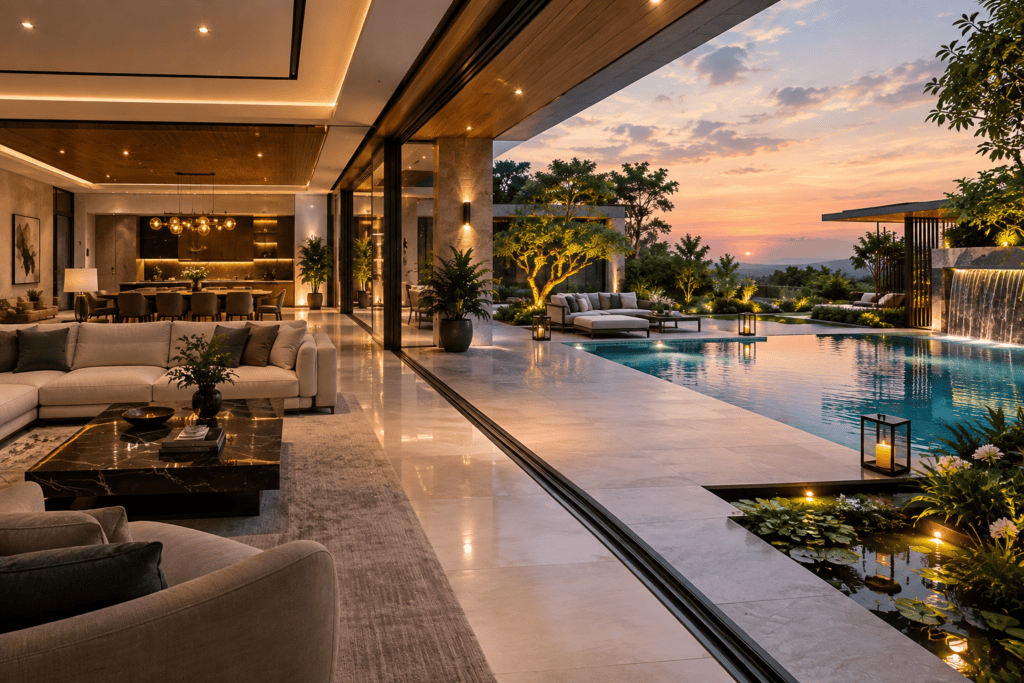
Large windows, sliding doors, continuous flooring, coordinated materials, carefully positioned furniture, and landscape views can visually connect the interior with the outdoors.
Imagine sitting in your living room at night and seeing a softly illuminated pool beyond the glass.
Or looking from the dining room toward a koi pond surrounded by planting.
The outdoor space becomes part of the interior experience.
This is where interior design, landscape design, pool design, and architectural lighting need to be coordinated.
GBS Creative’s residential interior design services can be planned alongside the broader outdoor environment, allowing the interior and exterior to share a consistent design language.
Bonus: Don’t Treat the Pool as a Separate Project
For modern villas, the swimming pool is often one of the most visible elements from inside the house.
That means its position, shape, materials, lighting, and surrounding landscape should be considered while planning the villa interior.
For example, a living room with floor-to-ceiling glass might be designed specifically around a pool view.
A dining area may face a landscaped deck.
A bedroom balcony could overlook a garden and water feature.
This approach makes the property feel more like an integrated resort rather than a house with a pool added later.
If you’re planning a pool as part of a villa project, GBS Creative’s pool design, construction and maintenance services can help coordinate the technical and design requirements from concept through long-term maintenance.
How Lighting Connects Interior Design With Architecture
Interior lighting does not stop at the front door.
The same design language can continue outside through façade lighting, landscape lighting, pathway illumination, pool lights, pond lights, and fountain lighting.
For example, warm interior lighting can transition into warm landscape lighting outside. Architectural wall textures can be highlighted from both sides of a glass façade. A pool can become a glowing visual extension of the living room.
This is why lighting should be planned alongside the architecture rather than treated as a finishing-stage electrical decision.
GBS Creative provides architectural and outdoor lighting solutions for homes, commercial buildings, institutions, campuses, monuments, façades, landscapes, pools, ponds, fountains, and public infrastructure across India.
Don’t Forget the View From Inside
Interior designers often think about what you see when you enter a room.
But modern villa design should also consider what you see when you’re sitting down.
From a sofa, what is visible through the window?
From the dining table, does the garden become a focal point?
From the bedroom, does the balcony frame something attractive?
From the entrance, does the architecture create a strong first impression?
These sightlines can influence where walls, furniture, windows, lighting, plants, sculptures, and water features should be positioned.
A well-designed villa creates beautiful views without requiring every surface to be decorated.
Technology Should Be Convenient, Not Visible
Smart homes are increasingly common in modern villas, but technology should support the design rather than dominate it.
Lighting, curtains, air conditioning, security, entertainment, access control, and other systems can be integrated into a central smart-home ecosystem.
The best result is when technology feels almost invisible.
You press a button or use an automated scene, and the environment simply responds.
For example:
Evening Scene
- Interior lights become warmer
- Curtains close partially
- Landscape lights switch on
- Pool lighting activates
- Façade lighting creates a soft exterior glow
The technology is doing a lot, but the homeowner simply experiences the atmosphere.
Modern Luxury Is About Consistency
A modern villa becomes sophisticated when individual decisions work together.
The flooring should relate to the furniture.
The furniture should relate to the architecture.
The lighting should enhance the materials.
The interior should connect to the landscape.
The landscape should frame the pool.
The pool should complement the architecture.
The façade lighting should reveal the building at night.
This is what creates design continuity.
Instead of having a beautiful living room, an impressive pool, and a separate garden, you create one complete environment.
Why an Integrated Design-Build Approach Matters
When different teams work independently, coordination can become difficult.
The interior designer may select a feature wall without knowing where electrical points need to be positioned. The landscape team may plan planting without considering views from the living room. Pool construction may begin without coordinating drainage or lighting.
An integrated design-build approach reduces these conflicts.
At GBS Creative, interior design, landscape, pools, ponds, fountains, lighting, and other elements can be considered together as part of a broader project vision.
This is particularly valuable for luxury villas where architecture and outdoor living are closely connected.